

Bulk Ordering Professional Nail Products: 2026 Guide
Table of Contents
- Why Bulk Ordering Professional Nail Products Saves Money
- How to Compare Wholesale Nail Supply Prices
- Vetting Suppliers and Verifying Product Authenticity
- The Salon Nail Supply Checklist for Bulk Orders
- Nail Salon Inventory Management and Reorder Points
- Bulk Gel Polish: Buying Without Wasting Money on Dead Shades
- Storage, Safety, and Handling Bulk Nail Products
- Conclusion: Build a Bulk Ordering System That Fits Your Salon
- Frequently Asked Questions
Last Updated: October 12, 2026
Why Bulk Ordering Professional Nail Products Saves Money
Bulk ordering professional nail products means buying salon supplies in case quantities or larger package sizes to lower the cost of every service you perform.
Most technicians assume the cheapest sticker price wins. It rarely does. A case of 500 disposable buffers at $33 sounds like a bigger commitment than a single pack, but the per-piece cost is what lands in your service margin.
Cost Per Use vs. Sticker Price
Cost per use is the price of a product divided by the number of services it delivers. A 128 oz monomer bottle at $85 looks expensive next to a 32 oz bottle at $35, until you divide by the number of sets each produces.
Here's the framework we recommend:
- Estimate how many services one unit covers
- Divide the unit price by that number
- Compare the result across sizes, not the shelf price
The larger size usually wins on paper, but only if you'll use it before it degrades or your client mix shifts.
Total Landed Cost: Shipping, Storage, and Waste
Total landed cost is the full amount you pay to get a product onto your shelf and into a service: unit price, shipping, storage space, and anything you throw away.
A few costs that quietly erode bulk savings:
- Shipping that eats the discount on a small order
- Shelf space in a small studio that could hold faster-moving stock
- Waste from a shade or size that never gets used
How to Compare Wholesale Nail Supply Prices
Comparing wholesale nail supply prices means normalizing every quote to a per-unit or per-service figure before you decide. The invoice number tells you almost nothing on its own.
Ask each supplier for the same three data points:
- Unit price at the case quantity you'd actually buy
- Minimum order value and shipping terms
- Whether the case size is fixed or flexible
Then run the math. A supplier with a lower unit price but a high minimum order can cost more per month than one with a slightly higher unit price and no minimum.
Reading Case Quantities and Unit Math
Case quantity is the number of individual pieces inside one bulk package, the most important number on a listing, and the one buyers skim past.
Take the Fusion Nail shine buffer 2 Way Case. It ships as 50 packs of 12, for 600 pieces total, at $437.00.
The same logic applies to the Slim Nail Buffer Orange White Grit 80/100 500 pc pack at $33.00. That's about 7 cents per buffer.
| Product | Case Size | Price | Approx. Cost Per Piece |
|---|---|---|---|
| Fusion Nail shine buffer 2 Way | 600 pcs | $437.00 | ~$0.73 |
| Slim Nail Buffer 80/100 grit | 500 pcs | $33.00 | ~$0.07 |
| Monika Acrylic EMA Monomer | 128 oz | $85.00 | Priced per oz |
| Monika Acrylic EMA Monomer | 32 oz | $35.00 | Priced per oz |
Vetting Suppliers and Verifying Product Authenticity
Supplier vetting is the process of confirming that a distributor sells genuine, professional-grade products and stands behind them when something goes wrong. This is where gray-market resellers get exposed.

The most common complaint we hear from technicians: how do you know the product is real? A few checks separate a legitimate professional supplier from a reseller flipping diverted stock.
Verify Authorized Distribution
Start with the brand itself, not the reseller. Most professional nail brands publish an authorized distributor list or a "where to buy" page. If a supplier is not on it, ask why. A legitimate distributor can usually produce a letter of authorization, a wholesale account number, or a direct brand contact who will confirm the relationship.
Red flags that suggest diverted or gray-market stock:
- Prices far below every other distributor for the same SKU
- Listings that never show the manufacturer's name or full product label
- No lot, batch, or expiration information anywhere on the product page
Check Batch Codes, Expiration, and Ingredient Documentation
Professional products carry batch or lot codes so the manufacturer can trace a production run if a problem surfaces. Before you commit to a case, ask three questions:
- Can you confirm the batch or lot code on the units you will ship?
- What is the shelf life, and what is the oldest stock you would send?
- Can you provide the safety data sheet (SDS) and full ingredient list?
An SDS is not optional for professional-use liquids. It documents flash point, handling, first-aid measures, and disposal. If a supplier cannot produce one on request, that is your answer.
Compare Return, Replacement, and Damage Policies
Bulk orders fail in transit more often than buyers expect. A cracked monomer bottle or crushed case of buffers is a real cost, and the policy you agreed to determines who eats it. Before ordering, confirm:
- Who pays return shipping on a defective or damaged item
- Whether damaged goods are replaced, credited, or refunded
- The window for reporting a problem after delivery (many suppliers require notice within a set number of days)
A supplier with a slightly higher unit price but a clear, no-argument damage policy often costs less per year than the cheapest quote with a "final sale" clause.
Match the Supplier to Your Buying Volume
Independent technicians and larger salons need different things. A solo tech buying one case per quarter benefits most from low or no minimum order value, fast shipping, and easy single-case ordering.
Ask directly which tier you fall into and what that unlocks. A supplier that treats a small studio like a wholesale account, or a busy salon like a walk-in retail customer, is mismatched to your needs regardless of price.
The Salon Nail Supply Checklist for Bulk Orders
A salon nail supply checklist is a pre-order list covering every category you restock, so nothing gets forgotten between shipments. Running the same checklist each cycle keeps a bulk ordering system from drifting into guesswork.
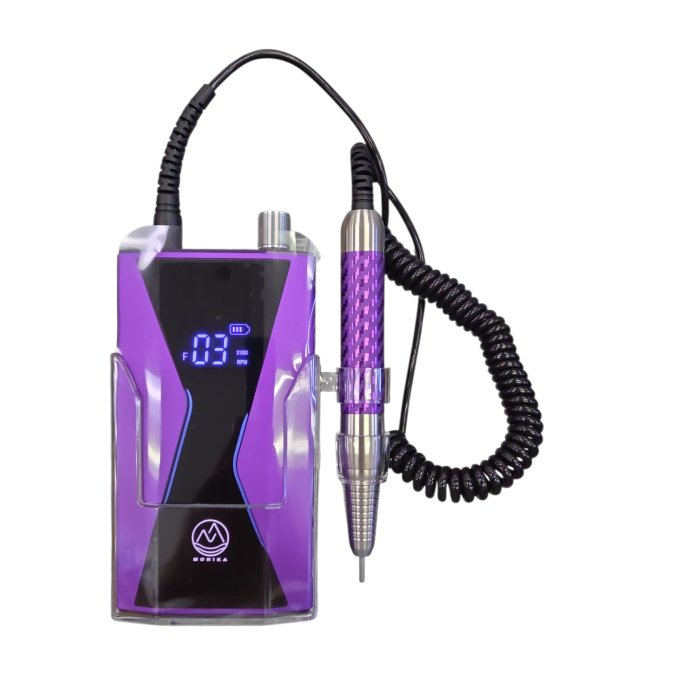
Work through it in this order:
Fusion Nail shine buffer 2 Way Case 600 Pc #MB-618 Case 600 →
- Count current stock in each category
- Note what runs out fastest between orders
- Check case quantities against your expected service volume
What to Stock in Acrylic, Gel, and Pedicure Categories
Acrylic, gel, and pedicure categories have different turnover rates, so they shouldn't be restocked on the same schedule.
For acrylic, a large-format monomer is the anchor purchase. The Monika Acrylic EMA Monomer Nail Liquid comes in a 128 oz size at $85.00 and a 32 oz size at $35.00.
For gel and pedicure categories, stock your top-selling shades in case quantities and keep trend colors in smaller counts until they prove themselves.
Nail Salon Inventory Management and Reorder Points
Nail salon inventory management means tracking stock levels and setting automated reorder points so you never run dry mid-week. The reorder point is the stock level that triggers your next order.
To set one, you need three numbers:
- Average units used per week
- Supplier lead time in days
- A safety buffer for busy weeks
Multiply weekly usage by lead time, then add your buffer. That's your reorder point. When stock hits it, you order. No guessing, no emergency runs.
Bulk Gel Polish: Buying Without Wasting Money on Dead Shades
Bulk gel polish is where most salons lose money, because color trends move faster than any other category. A full case of a shade that goes cold leaves you with inventory you can't move.
Our approach: split your gel buying into two tiers.
- Core shades in case quantities, restocked on your normal cycle
- Trend shades in smaller counts until they prove their turnover
Track which shades actually get requested. Anything that sits through two restock cycles without moving doesn't earn a case slot, that discipline separates a stocked shelf from a graveyard of discontinued colors.
Storage, Safety, and Handling Bulk Nail Products
Storage and safety requirements scale with order size. A case of monomer carries the same hazards as a single bottle, just in larger volume, so your storage plan needs to match. This is the section most bulk-buying guides leave out, and the one that keeps your license and clients safe.
Read the Label Before You Read the Invoice
For professional-use liquids like acrylic monomer, the product labeling is explicit: highly flammable liquid and vapor, irritating to eyes, skin, and respiratory system, and it may cause an allergic skin reaction. That means:
- Store in a cool, well-ventilated place
- Keep containers tightly closed when not in use
- Keep away from heat, sparks, open flames, and hot surfaces
For solid supplies like buffers, the main concerns are dust, moisture, and hygiene. Keep disposable buffers sealed until use so they stay clean.
Keep Safety Data Sheets on Hand
Every professional-use chemical you stock should have a safety data sheet (SDS) on file. The SDS covers flash point, handling, first-aid measures, spill response, and disposal.
Build a simple binder or digital folder with the SDS for every liquid, powder, and gel you buy in bulk. If a client has a reaction, or an inspector asks, you have the documentation ready instead of scrambling.
Ventilation and Volume
A single bottle of monomer on a station is one thing. A case of 128 oz bottles in a back room is another. Bulk storage concentrates flammable vapor, so ventilation matters more, not less, once you buy in volume.
- Store liquids away from your service area, not under the station
- Keep the storage room ventilated, not sealed
- Never store monomer near a water heater, furnace, or any ignition source
Shelf Life and Expiration Management
Bulk buying only saves money if you use the product before it degrades. Acrylic liquids, gels, and some powders have a shelf life, and stock that sits too long can thicken, separate, or cure poorly.
A practical approach:
- Write the received date on every case when it arrives
- Rotate stock so older units get used first (first in, first out)
- Check batch and expiration codes before adding a new case to the shelf
Conclusion: Build a Bulk Ordering System That Fits Your Salon
The hard part of bulk ordering isn't finding a supplier.
Beauty Zone Nail Supply serves licensed professionals with an extensive selection of acrylics, gels, dip powders, and salon equipment, plus case deals and monthly salon specials that make bulk buying straightforward.
Shop Now and build a restock cycle that keeps your station ready without overstocking your shelves.
Frequently Asked Questions
Do I need a professional license to buy wholesale nail products?
In most cases, yes. Many suppliers, including Beauty Zone Nail Supply, sell products intended for licensed professional use only, so you will need to provide a valid license number during account setup. This protects brands and buyers alike, since professional-grade acrylics, monomers, and gels are formulated for trained handling. If you are a beauty school student or educator, ask about educator or student accounts, because some suppliers offer separate terms for training programs.
What should I check before placing a bulk order for gel polish?
Check three things: shade demand, shelf life, and case quantity. Pull your last 60 to 90 days of service records to see which colors actually get used, then buy bulk gel polish around those shades rather than a full trend collection. Confirm the case quantity so you know exactly how many bottles arrive, and check the production date, because gel polish has a limited shelf life once opened. Ordering 12 bottles of a shade you use twice a month ties up cash and risks expired product.
How do I avoid overstocking when ordering nail supplies?
Set a reorder point for every high-use item instead of buying on impulse. Track weekly usage for your top consumables, such as monomers, buffers, and base coats, then set your reorder point at roughly two weeks of average use. That gives you a buffer for shipping delays without locking cash into shelves. For slower-moving items like specialty glitters or seasonal shades, buy smaller quantities and restock only when usage climbs.
How can I compare bulk prices for salon nail supplies fairly?
Compare cost per use, not cost per case. Take the case price and divide it by the number of individual pieces or applications, then add shipping and any pickup costs. A 500-piece buffer pack at $33.00 works out to about 7 cents per buffer, which is a more useful number than the case total. Do the same math across every item on your list so you are comparing like for like, and factor in free shipping thresholds or curbside pickup to lower the landed cost.